
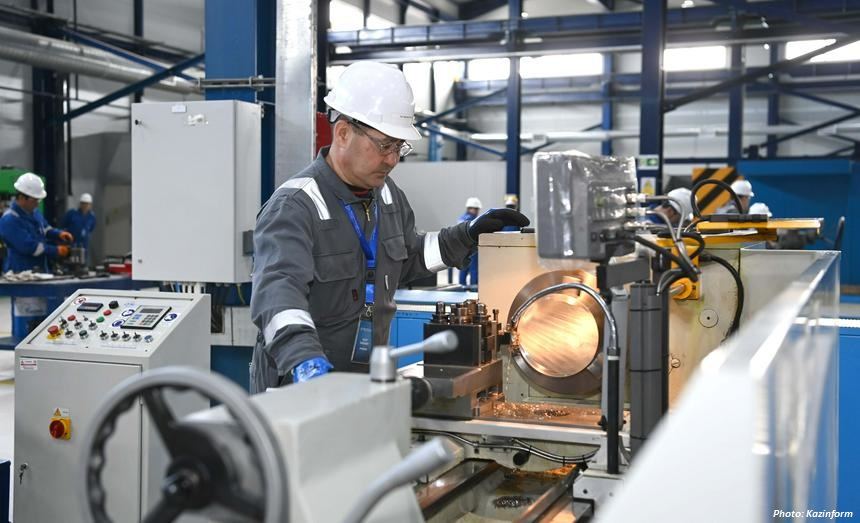


Industrial output in Türkiye expanded more than expected in January, official data showed Friday, ensuring a return to growth after two months of decline due to a global economic slowdown.
The industrial production index grew 4.5% year-over-year in January, the Turkish Statistical Institute (TurkStat) said.
Month-over-month, the output expanded 1.9% on a calendar and seasonally adjusted basis, the data showed.
Industrial activity bounced back strongly after the initial coronavirus wave in April 2020 and expanded for more than two years straight.
But annual growth slowed significantly since the summer, with demand declining due to the broader global slowdown.
Despite the buoyant January, the devastating earthquakes that hit the country's south in February are likely to impact subsequent growth.
The Feb. 6 quakes and strong aftershocks killed more than 46,000 people and destroyed or severely damaged over 230,000 buildings, leaving hundreds of thousands of people homeless, making it the worst disaster in Türkiye’s modern history.
In a Reuters poll, output had been expected to expand 2.45% year-over-year in January. The estimates in the poll of six institutions ranged between 1.90% and 3.50%.
In November, the index contracted 1.3% year-over-year, for the first time since 2020, and another 0.2% in December.
The January data showed the mining and quarrying index decreased by 7.6% and the manufacturing index increased by 5.8%, while the electricity, gas, steam and air conditioning supply index dropped by 5.7%.
On a monthly basis, the mining and quarrying index jumped by 4.4% and the manufacturing index increased by 2.1% and the electricity, gas, steam and air conditioning supply index increased by 1.4%.
The government is preparing to ramp up spending for post-quake recovery, which could lift industrial production as well as consumer spending, two key indicators of economic growth.
The region is rich in textile production and agriculture, which accounts for 16% of total employment and around 11% of industrial production, according to a report by the Istanbul Chamber of Industry (ISO).
The disaster forced millions to leave 11 southeastern provinces that were home to some 14 million people.
Damage from the disaster is estimated to be over $100 billion, according to the U.N. Development Programme (UNDP).
The World Bank estimated that the quakes had caused damage worth more than $34 billion, with recovery likely to double that sum.
President Recep Tayyip Erdoğan pledged a swift campaign and has said the devastated regions would be rebuilt within a year.
The government has already been prioritizing low-interest rates to boost exports, production, and investment and create new jobs as part of a new economic program. Dubbed the Türkiye Economy Model, the program aims to lower inflation by flipping the country’s chronic current account deficit to a surplus.
The country’s central bank last month lowered its policy rate by 50 basis points to 8.5% to support growth after the earthquake, saying the cheaper borrowing cost would bolster recovery efforts.
That brought the overall easing trend to 550 basis points since August last year.
The central bank justified the cuts by saying financial conditions must remain supportive to maintain industrial production growth. It cited the need for more stimulus in the face of the earthquakes when it delivered the latest cut.